Showing posts with label fiction. Show all posts

Friday, April 24, 2015

Please Ignore Vera Dietz, by A.S. King


Vera and Charlie rode the bus, roamed the woods, ate lunch, and shared secrets together. They even (secretly) loved each other. Due to "difficult" parents and a run-in with the wrong crowd they came to (publicly) hate each other. King begins with the end: Charlie has died and is being accused of a horrible crime posthumously. Vera knows who truly committed the crime and through a series of recounts, that bounce from one perspective and time to the next, we learn why she has waited so long to reveal the truth and what she has to work through emotionally to arrive at the point where it's possible for her to reveal all.

Charlie's spirit is ever-present; nagging her to clear his name and begging her to forgive him for his betrayal. He speaks through the washed up pizza delivery guy, thousands of Charlies squeeze into Vera's car, and he becomes the pickle on her Big Mac. Vera isn't sure if it's the alcohol or reality. She has loads of issues to work through: her mother leaving at the age of 11, knowing Charlie's deepest secrets, and dating an older guy. Her Dad is by her side as he unloads much of his own emotional baggage and the two finally arrive at a place where happiness is not a given, but is at least a possibility.

This book can be confusing and uncomfortable at times due to the skipping around in time, presence of spirits, and sexually related events that would be difficult for anyone to process, much less a teenager. Yet, this spastic approach finds a flow and mirrors the uncertainty that is Vera's life. 

Tuesday, March 31, 2015

Infandous, by Elana K. Arnold

"A myth is not in the telling, but in the endless retelling."

Sephora Golding's life, in all it's disturbing and tragic twists, has come to mirror the myths that inspire the art she creates. Her world revolves around her beautiful mother, Rebecca, and her art, which is inspired by the former and made using the scrap she finds all over Venice Beach. The narration feels distant from the turmoil taking place, true to Sephora's feelings. Her mother is dating a guy closer to Sephora's age, Jordan, she's barely hanging on in school, she's pressured to find a job, and her best friend, Marissa, is more confused about what she wants and needs than Sephora.

As with any good myth, her fate is inescapable, yet, she does't realize this until after the fact. The annual summer trip to her wealthy Aunt's in Georgia brings into focus just how very different her life could be. They have offered for her to come and live with them-an escape from her fate. Upon her return home, however, fate works for, rather than against her, as her art takes off and she has the opportunity to face the one that committed the infandous* act.

The myths interspersed throughout the chapters made me think, as I'm sure was Arnold's intention, about the brutality of many myths that we gloss over in our minds simply because they are deemed Literature rather than simply stories. Moreover, what would we think if these tales were told with a modern backdrop? Infandous provides us with that backdrop in this modern shocker of a myth.

*something that's too terrible to be spoken out loud

Friday, December 19, 2014

Holiday Reads

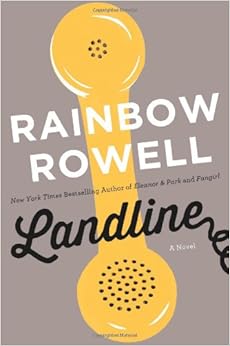
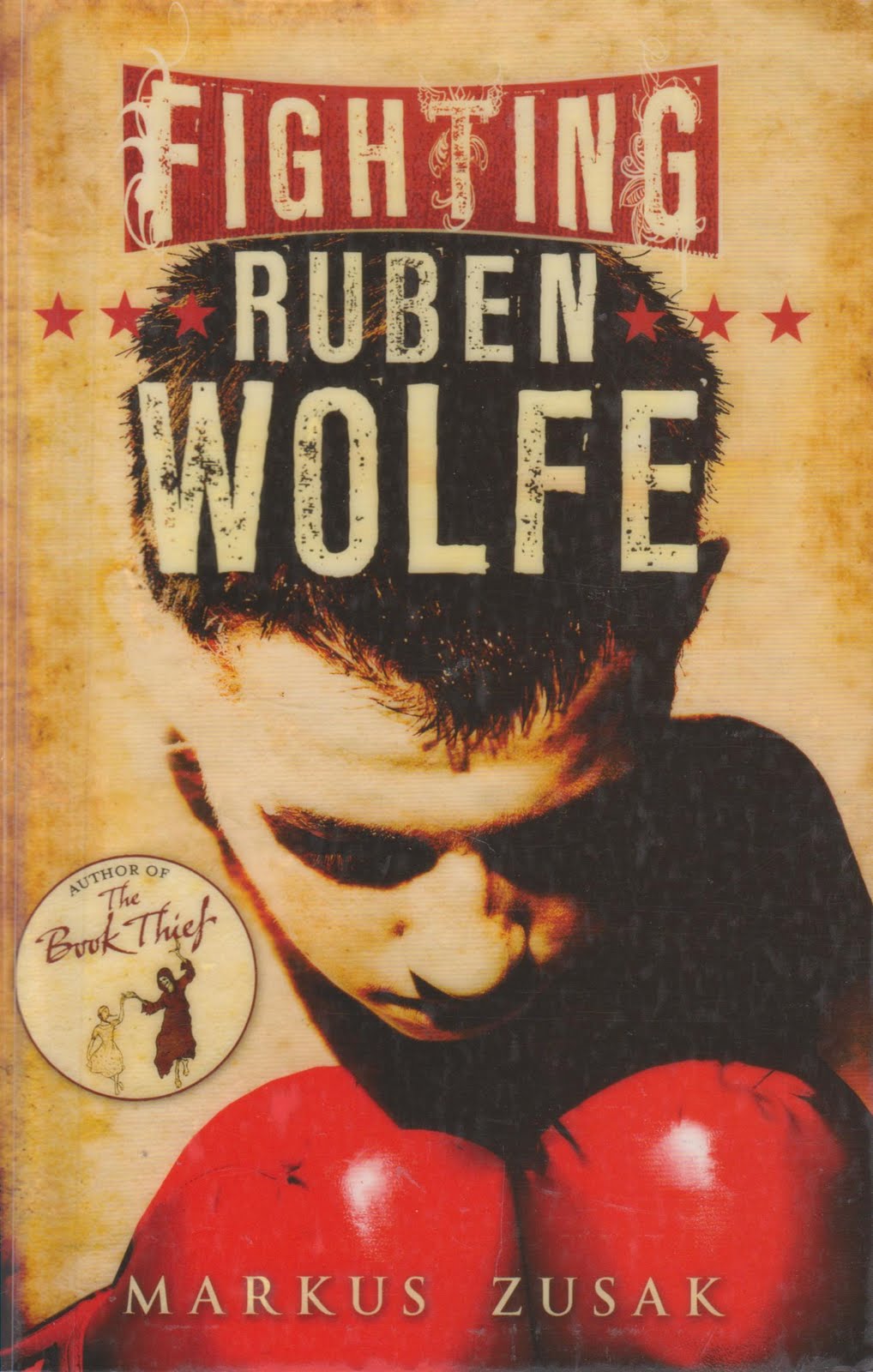
The days of snuggling up with a good book and warm coffee are upon us! Here's a couple more titles to add to that lengthy holiday reading list from two of my favorite authors, Rainbow Rowell and Markus Zusak:

Keeping up with kids, work, and a marriage is like juggling ice cream. You're doing good to keep it all in the air and it's never clean. Rowell grapples with these issues in Landline, as late-thirties, sitcom writer, mother of two girls, wife of one stay-at-home artist, Georgie, scrambles to sort out the mess that is her life. This book takes a hearty stab at magical realism, as Georgie puts the pieces of her crumbling marriage back together by connecting with the younger version of her husband, Neal, on the landline at her Mom's house. Georgie has made the decision to bail on Christmas with her family in Omaha in order to complete writing a pilot with her best friend and writing partner, Seth. Instead of completing the pilot, she spends the next few days reconnecting with the man she fell in love with twenty-some-odd years before and reliving a pivotal moment in their relationship; a moment when Neal made a grand decision that would forever change their lives. These conversations bring what is truly important into focus for Georgie. This story will resonate with anyone that has ever found that life and love takes more than luck and it's set during Christmas, though, it isn't all twinkling lights and mistletoe.


Life is a fight and the Wolfe brothers are going out swinging. Cameron and Ruben's father is unemployed, but refuses welfare, their brother has just moved out, their sister is out at all hours, and their mother is out-to-lunch; leaving the two boys to figure out how to hold onto the little pride they have left. The two begin boxing (illegally) for a some extra cash, they claim, but, in reality, it's to hold onto their sense of self. Cameron is doing good to stay alive, but Ruben is a king when he steps into the ring. He fights with a fire that can't be contained and becomes something of a cult hero. All the while, the fight raging within him to find a place in the world, despite a crumbling home life, leaves him scrambling. This story goes to the heart sibling bonds and the need for all people to keep their dignity, no matter the price.

Wednesday, October 15, 2014

A Sudden Light, by Garth Stein

"Everything is everything is everything" is how Trevor now views the world; years after his perception of his family and the line between the living and dead was brought into focus and blurred simultaneously. People, places, plants, and time are all connected. Trevor begins to put the pieces of his intricate and ill-fated family history together when he visits Riddell house with his father, Jones, in the summer of 1990. The massive estate, situated by Seattle's Puget Sound, is all that remains of the Riddell timber fortune. Jones hasn't been back since he was 16 and returns with his son in tow, intending to only stay long enough for his father, Samuel, to give him the power of attorney in order to develop the estate. This is a last ditch effort by Jones to save his marriage that is on the brink after his boat-building business went under.

Thus, Trevor is thrust into the odd world of Riddell house, unprepared for what he will find. From the beginning he finds himself intrigued and (uncomfortably) attracted to his Aunt Serena, who has stayed in the crumbling mansion to care for Samuel, diagnose by Serena (not a doctor) to have dementia. Trevor unearths old newspapers, letters, and diaries found in the local library and stuffed between the pages of books and the bottom of ancient trunks that reveal the series of events that led to the sinking of the Riddells. However, the clouds of his family's legacy part when the spirit of his deceased Great-Great Grandfather, Benjamin, visits him.

Ultimately, the fate of the family and the sanctity of the land is put in Trevor's hands. Elements are so organically intertwined by Stein that the mechanical tone at various moments in the book is odd. The gradual unveiling of the extent of Serena's insanity is exquisitely unsettling and the notion that all will return to the earth is played out to the end, as the flames rise and the ash settles.

Thursday, September 18, 2014

The Brief Wondrous Life of Oscar Wao, by Junot Diaz


Love isn't easy to come by when you're an overweight nerd like Oscar, but it's even more rare when you have fukú to deal with. The friendly narrator in The Brief Wondrous Life of Oscar Wao, who has such a conversational tone that you feel like you've been sitting on his couch listening to the whole story in person, introduces us to history of this curse. We learn that it made it's way to the Dominican Republic and surrounding islands with the Europeans and cuddled up with the dictator at the time, known as Trujillo, who killed, raped, and doomed thousands of families to endure the wrath of fukú. 

Oscar is part of one such family and the story of each of its members is told from their perspective. We learn of Lola's trials with her hateful mother and being sent back to the DR to spend time with her grandmother. Beli, Lola and Oscar's mother, is tough as nails and mean to boot as a result of the death of both of her parents, abuse, and betrayal. Her saving grace was La Inca, her aunt and adoptive mother, who is the glue that holds the family together. Then, there's Yunior, who is revealed as the narrator partway through the book. He was Oscar's roommate at Rutgers and dates Lola for a few years before his cheating ways finally catch up with him. 

As the stories of these characters and many more are told we begin to realize that fukú is truly inescapable. It's something beyond this world that lives in the fantastical realm that determines one's fate before they are even born. Diaz brings mythology into the modern day with his magical way of melding history, reality, and mysticism; all held together with a spattering of expletives. 

Wednesday, September 10, 2014

The Amazing Adventures of Kavalier & Clay, by Michael Chabon


The Amazing Adventures of Kavalier & Clay, by Michael Chabon, brought the idea of destiny to my mind time and again. Though, Chabon never says outright that it was fate that Josef (Joe) Kavalier and Sam Clay's lives merged at just the right time, it's understood. Maybe, it's because the circumstances that brought the two together were wrought with life-altering heart-ache that "destiny" doesn't seem quite appropriate.

Their journey begins as Hitler is taking over in the late 30's and Joe miraculously makes his way out of Prague and to the warm bed of his cousin, Sam. At 19, Joe has left behind his entire family and his only chance at a livelihood is his art, which he has been honing at the Art Institute in Prague. Sam, who has been working for Empire Comics, wastes no time teaching Joe the way of comics. Soon, the two concoct the storyline and artwork for the first comic featuring the Escapist. A superhero fashioned after Houdini that is able to outwit the Nazis time and again.

The Escapist mirrors Joe's own life, featuring the Golem, which Joe actually had a hand in saving from Prague. Also, Joe practiced magic under the tutelage of a famous magician, Bernard Kornblum. As the story progresses Joe and the Escapist blend into one. In the beginning, Joe refuses to perform magic, stating that his best magic trick was making it out of Prague. As time goes by, he starts performing at Bar Mitzvahs and manages to keep a man from detonating a bomb and eventually sets his mind to bungee jumping from a building; like a superhero or a Dad trying VERY hard to impress his son might do.

During this transformation, Joe falls deeply in love with a fellow artist, Rosa, who he leaves with child, unbeknownst to him, to join the Navy in order to "kill the Nazis" after the ship carrying his younger brother and hundreds of other refugees is bombed. Sam, whose lovely companion Tracy Bacon is killed in the war, marries Rosa to save face and raises Tommy as his own until Joe reappears twelve years later.

This is a masterful work that connects historical events, art, comics, love, loss, religion, and fantasy in such a way that you can only pick your jaw off the ground and grin. 

Thursday, July 31, 2014

The Goldfinch, by Donna Tartt

This captivating work of art, The Goldfinch, begins and ends with a boy, Theo Decker, trying with all of his might to hang onto the only sense of belonging that he's ever known, his mother, by way of a masterpiece: The Goldfinch. When he narrowly eludes death, that finds his mother, due to an explosion in an art museum, he talks with an old man, Welty, during his final moments on earth. This conversation forever shifts the direction of Theo's life.

Since his father abandoned him and his mother to feed his gambling addiction in Nevada, Theo is left in the care of a wealthy family of a friend. He's a fish out of water in the posh home, surrounded by kids whose greatest concern is scoring a high SAT score. Theo's dad pops back into his life and whisks him across the country to live in the foreclosed desert of abandoned mansions that is Las Vegas with him and his drug-dealing girlfriend. Theo latches onto a worldly kid, Boris, who has been shuffled from one country to the next by his mine drilling alcoholic father. Along with many languages, Boris has also picked up a penchant for stealing, drinking, and living each day as though it could all be gone the next.

Theo eventually, miraculously, makes his way back to New York and to Hobbie, the partner of Welty, who  teaches him the antique trade of purchasing and restoring old furniture. He finds himself consumed by a swirl of unrequited love and an underworld of illegal art trade and theft.

This is one of the most gripping tales I've ever taken in. Evocative characters are staged around love, loss, and deceit with the dexterity of a master philosopher and storyteller. 

Tuesday, February 11, 2014

Tortilla Flat, by John Steinbeck

After World War I, four friends, Danny, Pilon, Pablo, and Joe, reunite in Tortilla Flat, a district of Monterey, California, to share wine, girls, money, and lodging. Danny inherits two houses upon his return from his Grandfather. He lives in one and lets his friends “rent” the other. “Rent” is a loose term since all involved know that money will never actually be exchanged.

In the midst of wine and women being enjoyed, the rent house goes up in flames. Though, Danny cares so little that he doesn't even step outside for a glimpse as people rush from all around to see what is happening. While Pablo, Pilon, and Jesus make the woods their home, Danny befriends a mentally handicapped man in town, known simply as the pirate. He is the only one of the bunch that works and buries the twenty-five cents he makes each day to save up for a  gold candlestick he promised to God for saving his dog. Joe, fresh from Army jail, and Pilon decide to dig up the bounty for themselves, but find a government elevation marker instead, which they could go to jail for stealing. Meanwhile, Danny trades stolen copper nails for a vacuum cleaner to give to Sweets Ramirez, the girl he is sweet on, but who has no electricity. These are just a few of the shenanigans that the friends enjoy.

Seemingly out of nowhere, Danny falls into a deep depression after coming to the realization that all that he has in life brings him little or no satisfaction. Thus, he moves to the woods, guzzles more wine than ever, and becomes distant from his friends, despite their efforts to connect with him. They even throw him a huge party that is immortalized, along with Danny’s alcohol consumption and penchant for fighting. Danny falls into the gulch and to his death at the party. Of course, all of Tortilla Flat are stunned and flock to the military funeral in their finest. All, except his closest friends who stand outside as the service takes place since they couldn't afford suits. They meet up around a bottle of stolen wine at Danny’s house. Accidentally, a fire is started, but none make an effort to put it out as they leisurely walk outside and watch as it burns to ashes.

Though, Tortilla Flat received a good deal of criticism after it was written for portraying Mexican-Americans as a lazy bunch of bums, Steinbeck was defensive of his portrayal of the paisanos he portrayed as people he knew and admired from the area where he grew up. In true Steinbeck fashion this simple story is dense with meaning, as the fable of King Arthur is followed throughout.


While I agree that the story doesn't portray this group of people in the best light, I do think it offers an adequate portrayal of how they were viewed by a white male from this area during this time. Also, I think that Steinbeck was often so driven by his theme, King Arthur in this case, that the characters can become distorted in order to fit. Despite the criticism, I still enjoyed it for what it was, and for what I love about Steinbeck’s stories; they offer a glimpse into the lives of a people in a place and time and the complicated inter-working of the relationships between those people. 

Friday, December 13, 2013

Judging a Book by its Judgments


I just read The Catcher in the Rye and The Grapes of Wrath back to back. Both are classics, but both left a very different taste in my mouth. The former, left me disgusted. For years, I've heard what a life-changing book The Catcher in the Rye was for so many people. While this bildungsroman certainly tells the story of an adolescent coming of age, it was a tale that I could relate to or sympathize with; and I don't think it's because I'm a girl.

Holden Caufield has been given every luxury and opportunity in the world. He comes from a wealth, has attended all of the best schools (literally, since he has been kicked out of one after another), seemingly adores his family, and has good looks and charm to boot, yet, he can only find negative in the world and people that surround him. In the documentary, Salinger, which inspired me to finally read the book in the first place, one person interviewed points out that "phony" is used over sixty times throughout the book, which says a lot about this characters outlook on the world. Now, while I realize that this young protagonist, who seems to be a dead-ringer or Salinger himself, is disillusioned by the flaunting of wealth and over-abundance of pomp and circumstance that surrounds him in New York, I may have had a bit more understanding if he had actually attempted to make a change, but rather than reaching out to those on the other end of the spectrum in order to counteract this source of discontent, he pokes fun at their clothes, behavior, and tastes. Over the course of a couple of days he blows his money on booze and entertaining girls after being sent home early for the holidays since he's been kicked out of yet another school. In the end, he confesses to his little sister that he is leaving it all behind. Though, he ends up go right back to his warm home and wealthy parents. It's a hard life.

As for The Grapes of Wrath, the Joads have no home to go home to after their farm in Oklahoma is repossessed by the bank and they are forced to make their way to California, along with thousands of others, in an attempt to piece back together a life ravaged by poverty. A theme throughout the book is that of helping out others no matter how little you may have. All are family and those with the least give so much more. Tom is the oldest Joad son and has returned from prison just in time to head West with his family. Truly tragic events saturate the entire book. Grampa Joad dies before the trip even begins and the Granma Joad passes before they have settled. One daughter, Rosasharn, is with child and must endure her husband, Connie, leaving her without explanation. The youngest boy, Winfield, and girl, Ruthie, don't have much opportunity to be children as they go without food and help pick cotton and peaches right along with the adults. Jim Casy, a former preacher, maintains a philosophical outlook on the devastating circumstances and attempts to rally people around him which leads to an early death. Throughout, all of the jobs, campsites, and extreme weather, Ma Jode is the rock that holds the family together by stepping up to make tough decisions to leave some behind, to comfort the sick in body and mind, and to give basic directions when the circumstances are so overwhelming and death is so eminent that others are rendered mute.

Steinbeck tells the story of people who have every reason to give up, to literally lay down and die, but persevere when the waters are rising so fast that there seems to be no hope, while Salinger weaves a tale of a young man who gives up when he has life rafts being thrown in his direction right and left. While I won't judge a book by its cover, I will judge one by its content and The Grapes of Wrath is now at the top of my list while The Catcher in the Rye is at the bottom due to the manner in which the characters judged the world around them.

Monday, October 28, 2013

Eleanor & Park, by Rainbow Rowell


I had a good feeling about Eleanor & Park when I opened up to the first page to find that it was set in August, 1986. Not only the year, but the month I was born. The two main characters, however, are teenagers and are dealing with much more difficult life events than I was as a newborn.

Eleanor doesn't blend in, with her red hair, curvaceous body, and eclectic style. Not surprisingly, she's an instant and easy target for the the kids at her new high school. As if this isn't enough to deal with, she has a mother who is doing all she can to keep her and her four younger siblings fed, clothed, and safe from her abusive alcoholic stepfather.

Park, on the other hand, is a pro at blending in. He compliments his Caucasian/Asian traits with all black attire. Unlike Eleanor, Park's parents provide nothing but love and understanding, though, the latter is sometimes difficult for his military minded father.

Their two worlds meet when Park, begrudgingly, allows Eleanor to sit beside him on the bus. In time the two silently bond over comics, as Park first notices Eleanor reading over his shoulder; leading to him lending her comics to read. A relationship develops with uncertainty as the two test the waters of conversation, holding hands, and first kisses.

However, what sets this book apart from other gushy love stories is Rowell's exquisite grasp of what it is to be a teenager, from the dialogue to the thought-process. There is something so sincere about both characters and the seriousness of Eleanor's situation, though difficult to read at times, is believable and makes their relationship so much more than a high school fling. The story comes to a roaring climax when Eleanor's stepfather's wickedness overflows and the two are forced to make some difficult decisions that will inevitably affect their future.


Sunday, March 3, 2013

Where Things Come Back, by John Corey Whaley


The story of life is written by the people, places and events that come and go, which is what makes the constants, however, boring they may seem at times, so important when all else seems to change. Where Things Come Back follows individuals searching for a life outside of the small town of Lily, Arkansas. Though, in the end they are all searching for a way back.

Lucas' cousin dies of an overdose and his Aunt is left to drudge through the guilt and heartbreak of losing her son. Soon after, Gabrielle, Lucas' brother, goes missing. The appearance of what was thought to be extinct woodpecker keeps the story from the headlines, but it turns Lucas' life upside down as his Mom slowly retreats to her son's room and his Father stops working to focus on finding his son.

Lucas' best friend spends most of his days and nights at Lucas' since his home is no place to call "home." Yet, his spirits are always high and the care of his girlfriend, Mena, make the future something to look forward to.

Ada Taylor is the girl that all the boys dream of, including Lucas, but all the boys she dates die. There's only been two, but the whole town is waiting for the next to go. When her boyfriend, the Quitman, is paralyzed in a car wreck, the curse seems true, but this doesn't keep Lucas from giving into Ada's coming on.

Meanwhile, in Georgia two college students, Alma Ember and Cabot Searcy, find one another during a time when their lives are in flux. Alma soon find that she is pregnant and the two marry in a flurry. However, the fast love is quick to die as Alma finds Cabot's obsession with the book of Enoch, which started with the death of his college roommate years before, too much to handle and moves back to her hometown, Lily.

Some, like Cabot, see Lily as their destiny, as he thinks, "Everything that had, in some way or another, led him to some nothing town where, as it seemed, things could come back from the dead, mistakes, could be rectified, lives could be started over" (207). Others, can only see it as a prison, but what Whaley makes clear in his seamless third-person writing from Lucas' perspective, the perfectly uncomfortable first-love feeling, and the spot-on description of the mind-numbing feeling of losing a brother, son, and friend is that life is chock-full of horrendous days and months that are made bearable by the tremendous moments that keep bringing us back for a second helping of life. 

Wednesday, January 30, 2013

The Magician's Elephant, by Kate DiCamillo

 
Peter Augustus Duchene is quite the name for an orphan with more questions than answers. For a person with little fortune so far in life, the appearance of a fortune teller in the street baring news of where to find his long lost sister is more than good news; it is a life changing event. And that is how life goes. Anything is possible and that is exactly what DiCamillo touches on: the impossible becoming possible. 

Meanwhile, a magician performs the best trick of his life with dire results. With the wave of his wand an elephant comes crashing through the tent ceiling, paralyzing a well-to-do woman. Also, a man and his dog find their own magic in the air, it seems, and Peter's lost sister is given mysterious signs leading her to her brother. 

Lives pass one another and at times crash unappolegetically, as DiCamillo masterfully brings all of them to a breath-taking head. There are wonderful additional resources for incorporating this classic in the making into your classroom.

This is How you Lose Her, by Junot Diaz

Love that is lost means so much more when all that one has is the void that is left. Diaz shows how love comes in many forms, is felt on various levels, and can disappear as quickly as it first tickled one's heart. Yunior, an outrageously intelligent, hard-headed with a scarred past that leads him to rationalize lies that ultimately hurt and lead to the loss of the person her holds most dear.

While Yunior's story remains at the center, the trembling hearts of others swirl around him, as his best friend reveals a love child in the Dominican Republic, a woman struggling to make a living in the US with the distance from her family still at home tugging at her heart, and a young student grappling with an unexpected pregnancy that could keep her from an education that she has built her whole life around.

Yunior's older brother, Rafa, attempts to hold onto the last ounce of who he was before cancer dwindled him down to almost nothing while Yunior finds and loses himself in the arms of Alma, Miss Lora, Magdelina, and others. They bring wisdom, comfort, spontaneity, and sometimes nothing more than a warm touch.

Sunday, June 24, 2012

The Paris Wife, by Paula McClain

Ernest Hemingway has become a man of lore. His work gives us a glimpse into the lives of very normal people and the intricacies that make them infinitely interesting. McClain has mixed the myth of his Hemingway's own stories that mirrored his own life to an extent along with personal correspondance and his own memoir to paint a picture of this man, but more importantly of his first wife, Hadley.

Though, the end (divorce) is know from the beginning, with each sentence the reader feels the love between the two grow thick as molasses and hope that the end could be changed, even though the story wouldn't ring as true to what life is. Hadley is a simple woman who finds a new start in Hemingway as she nears thirty and he is just getting started on his career. The two make it through thin years in Paris, as Hemingway works to making it the writing world with helpful eye and friendship of people like Gertrude Stein, Ezra Pound, and Scott Fitzgerald. Through trips to Spain, the loss of years of Hemingway's work and the birth of their son, Bumby, Hadley is always supportive.

However, as the two close in on five years of marriage, and over a year of trying to overcome an affair between a wealthy woman that writes for Vogue, Pauline, and Hemingway, the two are merely a shadow of the people they once were. Hadley finally concedes to a divorce.


While the five years make up a small portion of the two's lives, there is no denying the lasting influence that one had on the other. Hemingway says repeatedly that Hadley is the best of people, much better than himself, possibly too good. Though, he remarried several more times, Hadley was by his side during the most formative years of his writing developing view of the world and McClain displays their relationship beautifully in all of it's grittiness, leaving the reader with as much admiration for the woman behind the Hemingway as the man himself. 

Monday, May 7, 2012

The Fault in Our Stars, by John Green

http://fishingboatproceeds.tumblr.com/post/11657166425/the-cover-of-the-fault-in-our-stars-designed-by
Life is full of ups and downs, life and death, love found and lost, but when cancer is brought into the mix all of these elements are compacted into a much shorter time when the ill person is still a teen. The Fault in Our Stars, by John Green, supplies an in depth view on what this situation might be like, as seen through the eyes of  Hazel, who's lungs are failing her, and Augustus, who lost a leg to cancer.

The two star crossed lovers' paths intersect for the first time at the cancer group meeting at a church in what they have deemed the heart of Jesus. From there a relationship develops around a love of literature, family, and the life that they want to hold onto so desperately in spite of the odds that are against them.

Hazel shares her favorite book, The Imperial Affliction, with Gus, along with the backstory of how much the book means to her and her ongoing attempt to connect with the author, Van Houten, in order to find out what happens to the characters whose stories are left unfinished. Hazel used her "Make a Wish" for Disneyland, Gus has held onto his and uses this opportunity to take a trip with Hazel and her mother to Amsterdam to meet Van Houten.

Though, the author doesn't live up to their expectations, there is so much more that surmounts the two starry eyed kids' expectations that the unfairness of their not surprising, yet horrible, fate will bring tears to the eyes of anyone with a heart.

Green more than delivers what has come to be expected of him as an author in this telling of lives that are too short. Lives that could have been remembered by many, but now will be immortalized in the hearts of a few. The reader will be left wondering if, in such a case as this, a greater memory in fewer means more. I think so. 

Monday, April 30, 2012

Rotters, by Daniel Kraus

Joey Crouch's days are fairly monotonous. He's a good student, plays the trumpet, gets along with his Mom, and has a best friend he can count on. His life is not exceptional, living in an apartment in Chicago with his single Mother and having never traveled outside of the city, but it is far from bad.

In an instant, Joey's life takes a completely different turn when his Mother fails to turn to see an oncoming bus and is hit and killed instantly. She would have heard the bus, if she weren't deaf in one ear, the result of an accident that Joey has never pried his Mother about, but he will soon discover the root of this mystery when he is sent to live with his Father in the small town of Bloughton, Iowa.

What follows, is a series of horrible and heart wrenching events that one can hardly imagine having to endure. His Father, Harnett, hardly greets him before he leaves Joey for three days without any food, transportation to school, or idea of where he had gone or when he would return. While waiting for his return, Joey endures extreme bullying from his classmates and teachers and has little hope of escape when a call to his best friend is met with laughs of disbelief before the payphone times out.

When Harnett  finally returns, Joey is determined to find out the reason for his long stints of being away with the intention of turning him into the authorities. What he finds leaves him as pale as death. Harnett digs up the dead and takes the items they were buried with, which requires chopping off appendages and slopping through rot to retrieve the treasure from the bloated bodies.

While Joey is understandably disgusted and in a shock at the discovery of his Father's means of survival, his feelings take a turn as the violence increases at school and it appears his only means of survival is to embrace his Father's penchant for digging up the dead.

From this point on, Kraus concocts a belly-turning assemblage of events and people that will leave the reader reeling. From an underground group of diggers, to a book of polaroids of the dead that is sure to be the end of them all, to Joey helping out the very person that threatened to bring down all of the diggers in a cross-country, drug induced, digging marathon. There is no end of surprises and gut-tumbling descriptions in this handily crafted horror of a book.

Wednesday, April 11, 2012

Red Zone, by Tiki & Ronde Barber

Brothers, Tiki and Ronde Barber, know a thing or two about football. Tiki plays for the New York Giants and Ronde plays for the Tampa Bay Buccaneers. Red Zone gives the reader insight into where these football phenom's story started as their 9th grade football season is recounted.

The Hidden Valley Eagles are off on the right foot leading up to the most important games of the season, with a good overall record and having improved a great deal over the course of the season. As the playoffs approach Tiki, Ronde and the rest of the team are confident that they will have a good run in the playoffs...maybe even make it all the way to the championship! Disaster strikes when one of their best players comes down with a fever and spots? That's right. Chickenpox!

As one player after another becomes spotted, the teams' dreams of being district champions start to look like nothing more than just that...a dream. The brothers step up to fill the spots left empty as players drop right and left, but when they come down with the itch as well, it seems that there is no hope. The boys' hope and determination are reignited by the inspiring words and hard work ethic of their Mother and the camaraderie they share with their teammates. Will it be enough to make it all the way?

You'll be itching to get to the end of the book and find out the fate of the Eagles, as they wrangle with the ups and downs and ultimately find that teams win and lose games, not individuals.

Monday, February 20, 2012

The Downside of Being Up, by Alan Lawrence Sitomer

Puberty is a confusing, embarrassing and emotional time for both sexes, but there are certain things that pop up for boys that can ruin a perfectly good day. I'm pretty sure Sitomer uses every euphemism known to man, and possibly some new ones, to describe unexpected upward occurrence. However, the realistic and endearing story of Bobby, the protagonist in the this teen tale, is what makes this book a must-read for all boys.

Bobby is average, extremely average, in fact. He has a sister that hates him, his parents don't have a clue about him, his Granddad is a little wacky and he can hardly keep his mind on school, but does his best. This makes a down-there incident in math class, resulting in expulsion, all the more unexpected and hard to deal with. After Bobby's Dad puts his persuasive tactics, that he has been honing in his job, to use, Bobby is allowed to return to school, but only if he agrees to go through counseling. With trepidation, Bobby concedes.

Upon returning to school he is met with all of the snide remarks that would be expected from teen boys in light of such an incident. Bobby's only friend is Alfred Finklestein, a pimply, obnoxious, brace-face boy, doesn't help his current loser status, but Bobby can't shake him no matter how hard he tries. Along with the harassment, Bobby also finds that there is a new girl in school upon his return. Allison instantly takes the place of "dream girl" in Bobby's mind. The cherry on top of this disaster cake is that Allison's Dad is Bobby's math teacher; the one that tried to have him expelled.

When Bobby chances into actually talking with Allison, he can't believe his luck, and with the big dance right around the corner, he can only dream of asking her to go with him. Despite his bad luck thus far and the fact that his Dad even told him to not shoot for such a bright star, Bobby pops the question and, surprisingly, she accepts.

Bobby's only feat to overcome at this point is tickets and after talking with Allison on one of their daily walks home he decides to try and improve his relationship with his sister, Hillery, and help out his friend, Alfred, by buying their tickets as well. The decision is also made to keep this plan completely to himself. When he is only allowed to buy two tickets, Bobby resorts to nabbing two from Allison's Dad, but leaves the money to pay for them. Of course, all goes haywire when Allison is told by her Dad that Bobby simply stole the tickets and the dance plans fall through.

Good old Granddad saves the day when he snags the car to take Bobby to the dance to explain everything to Allison. After everything is made clear the two love birds dance into the night, Granddad is inspired to get back his own wife, and Hillary and Alfred actually hit it off!

While this ending is almost too perfect, the uncertainty, awkwardness and highs and lows of adolescence are portrayed genuinely in a way that will engage teenage boys and maybe even girls. There may have to be some creativity in the manner in which the plot is discussed, but once you have found a way kids are sure to be hooked and will likely pass the word of the book among themselves. 

Thursday, February 9, 2012

Beauty Queens, by Libba Bray


"Dreams do come true," is something most pageant hopefuls believe, but nightmares come true just the same. This becomes clear to all of the glitter-clad teenage girls as they find themselves swimming to shore following their plane taking a nose dive into the ocean. At least they were swimming. Some were not so lucky.

For those that do survive, there are still many more trials, but these beauty queens have different priorities than most. No food...what a great way to lose some weight before the competition. No protection from the elements...time to get a tan. No beauty supplies...coconut oil is great for the hair. As each girl slowly, very slowly in fact, comes to terms with the fact that they are probably going to be stuck on this island for a while, maybe forever, since the search was called off, some begin to try and find ways to make do. However, others carry on as usual.

The story is told from the various perspectives of the girls and the reader comes to have a better understanding of what drew each girl to pageants and have made them what they are today. A relationship flowers between two of the girls, one goes crazy, boys are encountered, and a few more die to add to the initial death count. Bray was not shy about using whatever vocabulary she pleased. Thus, this may not be appropriate for all Middle School, though, it was recommended for that age group. There is no doubt in my mind that this tragic tale of glitzy girls would be gobbled up in no time by most teen and preteen girls, though, I would lean toward the older teens.

Wednesday, February 8, 2012

12 Things to do Before you Crash and Burn, by James Proimos

Proimos takes the reader through a whirlwind of events in 12 things to do Before You Crash and Burn, as Hercules (a childhood name that stuck) makes the most of being sent to stay with his Uncle Anthony in Baltimore following the death of his father. As the story progresses, the reader finds out that Herc didn't have the best relationship with his distant father, but the two weeks spent in a different city with a list of tasks to complete from his uncle seem to be just the thing to help Hercules allow himself to come to terms with the passing of his father. The "unattainable girl" that he first runs into on the train is at the center of the Herc's adventures as he goes out of his way to find out who she is and how to meet her, all thanks to a book Herc thinks she left on the train.

This was an extremely fast read, being that it is told in a stream-of-consciousness manner and has very short chapters. While the events didn't seem completely plausible, like a girl that is a stranger making out with him after a minute of talking or the fact that they are able to reunite by way of a lost and found, it is nice to think that these sort of things could happen...and maybe in a perfect teenage world they do. One thing I would warn readers about is the amount of questionable vocabulary that is used. While it is appropriate for the story, it is definitely not ok for 6th grade up, as some of the recommendations stated.