Thursday, March 19, 2015

The Boundless, by Kenneth Oppel


In 1885, Will embarks on a trip to celebrate the completion of the Canadian Pacific Railway with his father who has been working on it for years. By the time the golden-spike ceremony is completed, he has not only survived and avalanche, but a Sasquatch! This may have been the end of his travels, had it not been for a brief encounter with Maren, a circus girl he cannot forget.

Thus, Will jumps at the chance a few years later to join his father on the first journey of the train version of the Titanic, a beast known has the Boundless, in hopes of reuniting with Maren. Much like the previous trip, nothing goes as planned. Will's life turns into a circus, literally and figuratively, as he becomes privy to the fact that two different parties are scheming to steal priceless artifacts off the train, leading him to seek refuge with the performers as he plots to save the treasure and keep the train chugging along.

Oppel is famous for his unforgettable characters and heart-stopping plots; The Boundless most certainly does not disappoint in this regard.

The Red Pencil, by Andrea Davis Pinkney


Amira's days are filled with caring for her disabled sister, completing chores, and looking after her lamb; leaving little time for much else. Yet, she spends the few spare moments she has drawing in the dirt with a stick and dreaming of writing real letters in school one day.

Life in a refugee camp in Sudan is uncertain from one day to the next and Amira's constant quest to find hope of a better future is reflected in the rhythm of Pinkney's short-lined verse. Her steady optimism is aided when she is given a red pencil by an aid worker. She treasures each mark she makes in her notebook as she draws the family, friends, and landscape that surround her, all the while marveling at the vibrancy of the marks on the page that don't blow away in the wind. Evans' illustrations illuminate Amira's aspirations and struggles and the simple lines compliment Pinkney's sparse verse. This is an inspiring book of a girl that is able to find the light in the darkest of places. 

Friday, February 20, 2015

Working on Research

It's been a while since my last post, in large part, because there's been a lot of research taking place in Montgomery Library! While wrapping up the Middle Ages inquiry projects with 6th grade, I began 8th grade research on the 20th century. We completed the in-class portion a couple of weeks ago and started with the 7th Grade Holocaust research.

While the students have been learning how to find and use information, I have been learning a good deal as well. I'm accustomed to working primarily with 5th and 6th graders, so it was a nice change of pace to select "advanced" when setting up the NoodleTools projects and aid them in the retrieval of sources that warrant this range of citation options. The use of end-notes and notecards within NoodleTools also allowed me to dust away some research cobwebs, as I recalled past projects, both taught and completed first-hand.

Each grade comes with it's own set of challenges. The younger students are just beginning to grasp the idea of various source types from and the idea that they can be found in a number of formats and locations. Additionally, learning not only to ask questions, but how to ask the right questions is a difficult concept to grasp and teach. As the students move along, the importance of the quality of the questions, more specifically, their essential question increases. Thus, the time spent developing that question increases and the degree to which they are guided decreases. At this point, they are in a precarious position, because they know enough of finding and citing sources that the basics don't need to be covered. However, they often become lackadaisical when it comes to keeping up with the checkpoints and details of the sources.

Overall, I've come to enjoy the research process from beginning to end, no matter the grade, subject area, or research focus. Adjustments can easily be made accordingly, though, time, or the lack-thereof, is one factor that can't always be adequately handled. The more time you have with students to intentionally direct them to be inquisitive and construct a hearty response to an essential question, the better. I suppose, my lack of free time recently is a good sign that we are heading in the right research direction, though!

Friday, January 9, 2015

Guided Inquiry

For several weeks now, I've been working with sixth grade on their Middle Ages inquiry project. We are using the Guided Inquiry Design that was developed by Carol C. Kulthau, Leslie K. Maniotes, and Anne K. Caspari. This framework breaks down the process into eight phases: open, immerse, explore, identify, gather, create, share, and evaluate. The book, Guided Inquiry Design: a Framework for Inquiry in Your School, takes you step-by-step through the process; providing worksheets and lessons along the way.

This is my first time going through the entire process and as we embark on the gather stage, I have a better understanding of how logical and useful this approach can be for students to learn more deeply about information that they are truly interested in. Also, it's impossible to not daydream of future projects, since it can be applied to any area in any subject.

One shining moment of learning, when the stars aligned and we could tell the kids were really learning, occurred during the identify stage. We modeled how to form an essential question by having them brainstorm information on the smart board related to a map displaying the route of the silk road and the goods that were traded at various locations. The ideas poured out of the students. There came a point when there was no room left to write and we modeled how we could look for connections between this information to inform our question. We then discussed that the wording and focus could be made even better by way of feedback. Then, the students formed their own question individually using this approach and then divided into their inquiry groups to comment on each others' questions in order to refine their question. We walked around to meet with each student individually about their question as the class continued to explore resources and record them in their inquiry log. I was astounded at the quality of the questions compared to what I've seen sixth graders produce in the past.

By taking the time to have the students read and gain background knowledge and also modeling how to ask an essential question, there's no doubt that the students have learned more and I would bet (though, we'll have to wait to see) that their final products will be of a higher quality, since they have truly taken ownership of the project.

Friday, December 19, 2014

Holiday Reads

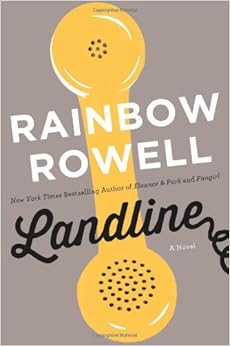
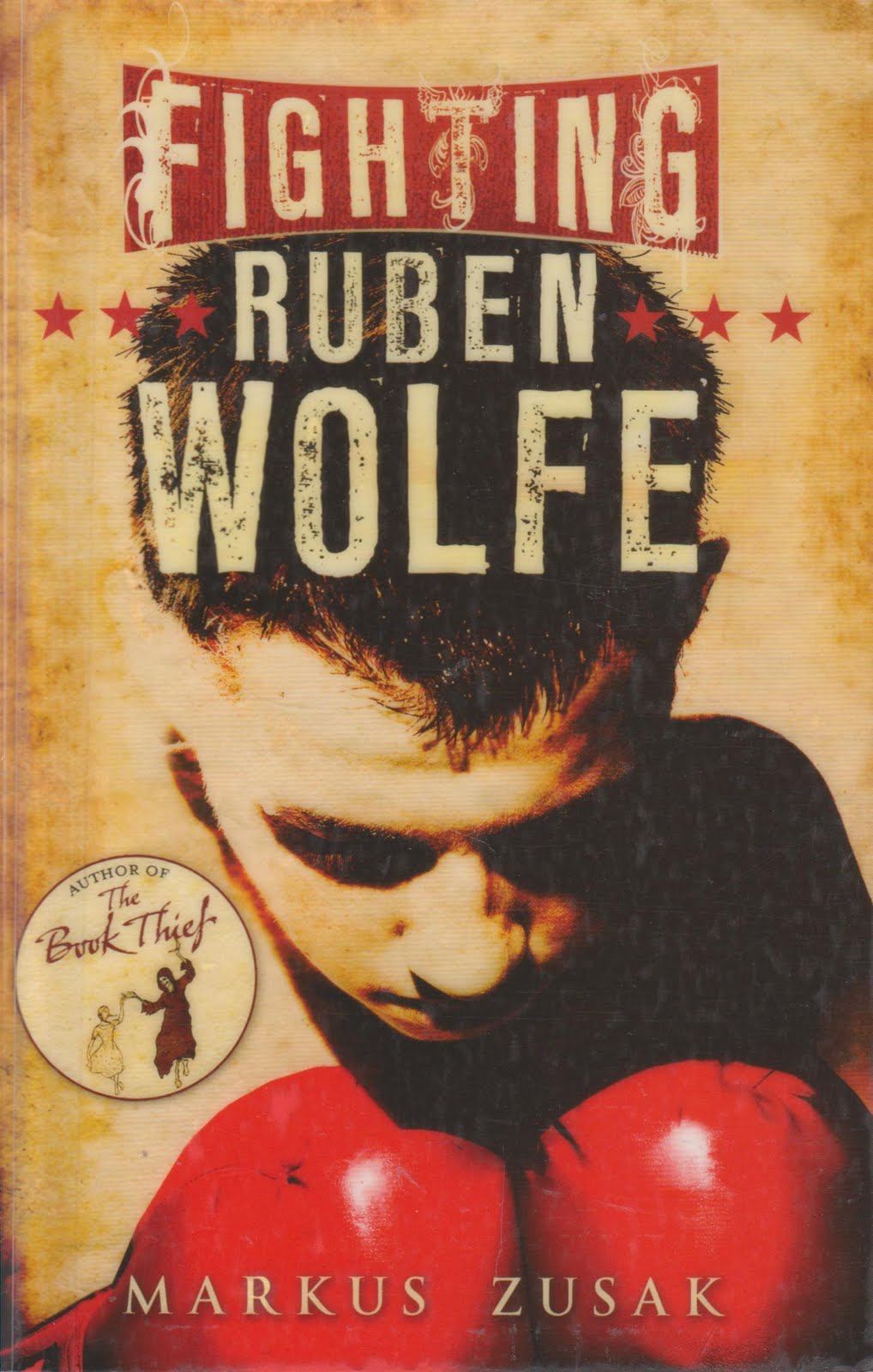
The days of snuggling up with a good book and warm coffee are upon us! Here's a couple more titles to add to that lengthy holiday reading list from two of my favorite authors, Rainbow Rowell and Markus Zusak:

Keeping up with kids, work, and a marriage is like juggling ice cream. You're doing good to keep it all in the air and it's never clean. Rowell grapples with these issues in Landline, as late-thirties, sitcom writer, mother of two girls, wife of one stay-at-home artist, Georgie, scrambles to sort out the mess that is her life. This book takes a hearty stab at magical realism, as Georgie puts the pieces of her crumbling marriage back together by connecting with the younger version of her husband, Neal, on the landline at her Mom's house. Georgie has made the decision to bail on Christmas with her family in Omaha in order to complete writing a pilot with her best friend and writing partner, Seth. Instead of completing the pilot, she spends the next few days reconnecting with the man she fell in love with twenty-some-odd years before and reliving a pivotal moment in their relationship; a moment when Neal made a grand decision that would forever change their lives. These conversations bring what is truly important into focus for Georgie. This story will resonate with anyone that has ever found that life and love takes more than luck and it's set during Christmas, though, it isn't all twinkling lights and mistletoe.


Life is a fight and the Wolfe brothers are going out swinging. Cameron and Ruben's father is unemployed, but refuses welfare, their brother has just moved out, their sister is out at all hours, and their mother is out-to-lunch; leaving the two boys to figure out how to hold onto the little pride they have left. The two begin boxing (illegally) for a some extra cash, they claim, but, in reality, it's to hold onto their sense of self. Cameron is doing good to stay alive, but Ruben is a king when he steps into the ring. He fights with a fire that can't be contained and becomes something of a cult hero. All the while, the fight raging within him to find a place in the world, despite a crumbling home life, leaves him scrambling. This story goes to the heart sibling bonds and the need for all people to keep their dignity, no matter the price.